Meta Enforces 195,000 Content Orders in India as Cartoonist Profile Blocked Again
Government data reveals a surge in legal restrictions on social media platforms, prompting new scrutiny of how algorithms handle political satire.
By Robert Thompson ·
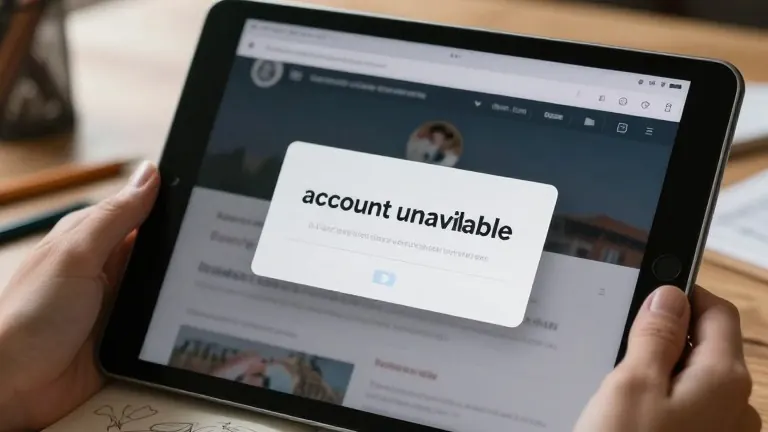
Meta Platforms Inc. temporarily restricted the Instagram account of Indian cartoonist Satish Acharya for a second time in three weeks, a move that highlights the company's compliance with a growing volume of legal orders from New Delhi. The 55-year-old creator discovered on Tuesday that his profile was inaccessible to Indian users, a restriction that followed an earlier block between September 28 and October 6.
The repeated restrictions come as the Indian government disclosed that agencies issued nearly 195,000 blocking and content-restriction orders to platforms including Instagram, Facebook, and YouTube between March and July. These figures, obtained through a right-to-information request and reported by the Indian Express, show a sharp increase in legal pressure on digital media. The orders are processed through the federal government's Sahyog portal, which allows authorities and courts to mandate the removal or restriction of specific content.
Technology policy expert Prateek Waghre notes that Meta appears more willing to comply with these legal demands compared to competitors like X, which he says is more likely to push back. Meta stated in a release that it may temporarily restrict accounts to comply with India's Information Technology Rules but did not provide specific reasons for restricting Acharya's account or the work of another cartoonist, Manjul. Manjul's post criticizing the election commission over voter roll revisions was also restricted earlier this month.
The surge in orders coincides with a period of intense political activity in India. In July, protests fueled by memes and Gen-Z humor led to the resignation of the education minister. Online debates have also intensified regarding a controversial revision of voter rolls that removed 130 million names. Prime Minister Narendra Modi's Bharatiya Janata Party has encouraged ministers to strengthen their online presence, acknowledging the platform's role in reaching younger audiences.
Government authorities have also sought greater scrutiny of platform algorithms. Media reports indicate that officials asked Meta to ensure its systems do not steer users toward limited narratives and to strengthen checks on content that could cause public disorder. The Indian Ministry of Electronics and Information Technology has not responded to requests for comment on these instructions or the specific restrictions placed on Acharya and Manjul.
For independent creators, the shift to social media offers reach without traditional media gatekeepers but introduces new commercial risks. Rachita Taneja, creator of the popular Instagram comic Sanitary Panels, describes the platform as a for-profit entity that answers to advertisers. She argues that Meta's compliance reflects commercial priorities rather than a focus on user rights. Meta declined to comment on this assessment.
Cartoonists report that the lack of explanation for blocks creates uncertainty. Acharya wrote to Meta regarding his initial restriction but received no reply. He was preparing to file a lawsuit when his account became accessible in early October, only to be blocked again for three days this week. Sandeep Adhwaryu, a newspaper cartoonist, notes that artists may soften captions or avoid certain subjects, a form of self-censorship that can become normalized over time.
The legal framework allows authorities to order restrictions, which the government says help tackle unlawful material. Critics, including free-speech advocates, warn that these tools can stifle political satire. India currently ranks 157th in the World Press Freedom Index, a metric that critics say reflects growing pressure on independent media. The government rejects this view, maintaining that its media environment remains free.
Creative communities are developing strategies to support one another during these restrictions. When Acharya's account was first blocked, Taneja created a stick-figure cartoon in solidarity. Adhwaryu compares satire to a shape-shifting virus that mutates in response to its environment, suggesting that humor will continue to find new ways to reach audiences despite platform-level controls.
Acharya continues to produce work that targets the current government, a shift from his pre-2014 cartoons that often targeted the previous Congress-led administration. He notes that while he faced occasional trolling before, he has not experienced official restrictions under prior governments. His current work, like that of many independent artists, relies on direct access to audiences through digital channels that remain subject to these legal orders.
Source: BBC News