
Netanyahu and Eisenkot Face Off in Israel's Tightest Election
Neither bloc has the 61 seats needed for a majority, setting the stage for complex coalition talks.
By Hannah Williams ·
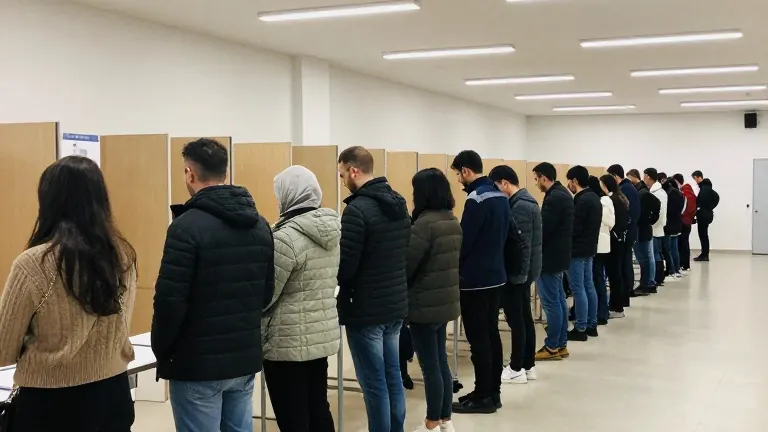
Israelis go to the polls today in a contest defined by security and democratic stability. Polling released on Friday shows incumbent Prime Minister Benjamin Netanyahu and former military chief Gadi Eisenkot in a near dead heat. However, projections indicate that neither their political blocs will secure the 61 seats required to form a majority government. This outcome points toward weeks or months of political negotiation before a stable administration can be established.
The campaign has centered on the security failures preceding the October 7, 2023 attacks by Hamas. In that assault, nearly 1,200 people were killed and 251 were taken hostage to Gaza. The opposition bloc has pressed for an independent commission of inquiry into the event, a measure Netanyahu has resisted while asserting that such a body would be biased against him. Despite these criticisms, Netanyahu has positioned himself as the primary security leader, citing strategic victories in regional conflicts and his close relationship with US President Donald Trump.
Eisenkot, who leads the Yashar Party, heads the opposition alliance known as the change bloc. This coalition includes former Prime Minister Naftali Bennett, Avigdor Lieberman, and Yair Golan. While these leaders hold different ideological views, they share the objective of replacing Netanyahu. Netanyahu’s path to power depends on reuniting with the far-right and ultra-Orthodox parties that form his current coalition, the most right-leaning in Israeli history. Two Arab party blocs are also participating, representing roughly one-fifth of the population. Most major Jewish parties have ruled out forming a government with these groups, though they remain potential kingmakers.
In the final days of the campaign, tensions flared over potential military action against Iran. Israel’s Channel 12 reported on Sunday that Netanyahu pushed for strikes before the election, a move opposed by military chief Eyal Zamir. The following day, CNN reported that Netanyahu sought approval from Trump for new strikes, which Trump declined. Netanyahu denied both reports. He also drew attention by posting an AI-generated image of a nuclear bomb striking Tel Aviv, a move Eisenkot described as hysterical.
Conscription has emerged as another key issue. Netanyahu’s government has struggled to enforce a Supreme Court ruling requiring ultra-Orthodox Jewish men in full-time religious study to serve in the military. Eisenkot has pledged to end Hamas rule in Gaza within 18 months through a US-led peace plan or military force. He supports most West Bank settlements but aims to curb attacks by extremist settlers. The prospect of a two-state solution has largely vanished from mainstream politics, with Eisenkot favoring a model of Palestinian autonomy under Israeli security control.
Seventy thousand Israelis reportedly returned from abroad to vote, while hundreds of thousands cast ballots for the first time. Exit polls will be published at 22:00 local time. Netanyahu’s Likud party will gather in Jerusalem, while Eisenkot’s Yashar party will meet in Tel Aviv. Votes from hundreds of thousands of soldiers and reservists will not be counted until Wednesday, potentially benefiting right-wing parties that hold strong support within that demographic.
If no bloc reaches a majority, Israel faces the possibility of political deadlock. This scenario would trigger new elections, with Netanyahu serving as interim prime minister. Between 2019 and 2022, Israel held five separate elections as parties struggled to form coalitions. Today’s results will determine whether that pattern continues or if a new government takes shape.
Source: BBC News