
UK Draft Rules Assign £4,000 Value to V2G Tech
Government consultation proposes financial credits for bidirectional charging, a move critics say could allow manufacturers to sell more petrol cars while the technology remains niche.
By Robert Thompson ·
1.2 gigawatts. That is the amount of electricity the National Energy System Operator estimates vehicle-to-grid technology could provide on demand by 2030. The figure represents the equivalent of a single power station and forms the technical basis for new government proposals. These plans aim to integrate electric vehicles into the national grid more deeply.
The UK government closed a consultation on Friday regarding the zero-emission vehicle mandate. The draft rules would allow car manufacturers to earn financial credits for selling cars equipped with bidirectional charging hardware. This technology is commonly known as vehicle-to-grid, or V2G. Under the current framework, these credits would offset the need to meet strict sales targets for zero-emission models.
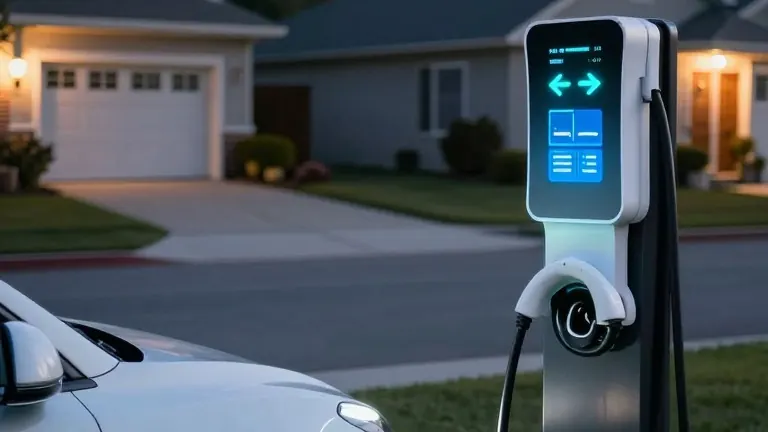
V2G systems allow drivers to charge their batteries automatically during periods of low electricity cost, typically overnight. The cars can then discharge that stored energy back to the grid during times of high demand. This process helps balance supply and demand when renewable generation from wind and solar is low due to weather conditions. It reduces the reliance on expensive gas power plants to fill supply gaps.
The proposed credit is valued at approximately £4,000 per vehicle. This financial incentive would apply if the car is fitted with the necessary hardware. The government intends to use these credits within the ZEV mandate framework. Manufacturers that miss their sales targets for electric vehicles could use these credits to avoid fines. This mechanism effectively allows the sale of additional petrol-powered cars.
Ben Nelmes, chief executive of the thinktank New AutoMotive, argued that the current proposal rewards installation over usage. He stated that carmakers should only receive rewards if the technology is actively used by drivers. Nelmes noted that the hardware costs only a few hundred pounds to install. He warned that granting two credits worth £4,000 each would hand manufacturers thousands of pounds per car. He added that few drivers currently own the expensive chargers required to utilize the system fully.
Vicky Edmonds, chief executive of the Electric Vehicle Association England, expressed concern about the timing of the incentive. She pointed out that only a fraction of the millions of EV drivers in the UK currently use V2G or storage technologies. Edmonds said consumers are still focused on immediate concerns such as vehicle cost and charging infrastructure. She described the move as premature, noting that the technology has not been tested at scale in the real world.
Some drivers already participate in similar schemes through third-party providers. Companies such as Octopus Energy in the UK, Renault in France, and BMW in Germany offer services that allow users to sell electricity back to the grid. Octopus Energy claims its drivers can save £620 annually through these arrangements. These existing programs operate independently of the proposed government mandate credits.
Environmental groups anticipate that the ZEV mandate changes may lead to a relaxation of electric vehicle sales targets. These groups project that such changes could result in an additional 147 million tonnes of carbon emissions by 2050. The consultation process has concluded, and the government is now reviewing the feedback before finalizing the rules.
Neso forecasts that V2G capacity could grow to 41 gigawatts by 2050. This potential output would be sufficient to meet more than a quarter of peak energy demand in Great Britain. The data supports the long-term strategic value of the technology, even as debate continues over the short-term financial incentives for manufacturers.
Source: The Guardian